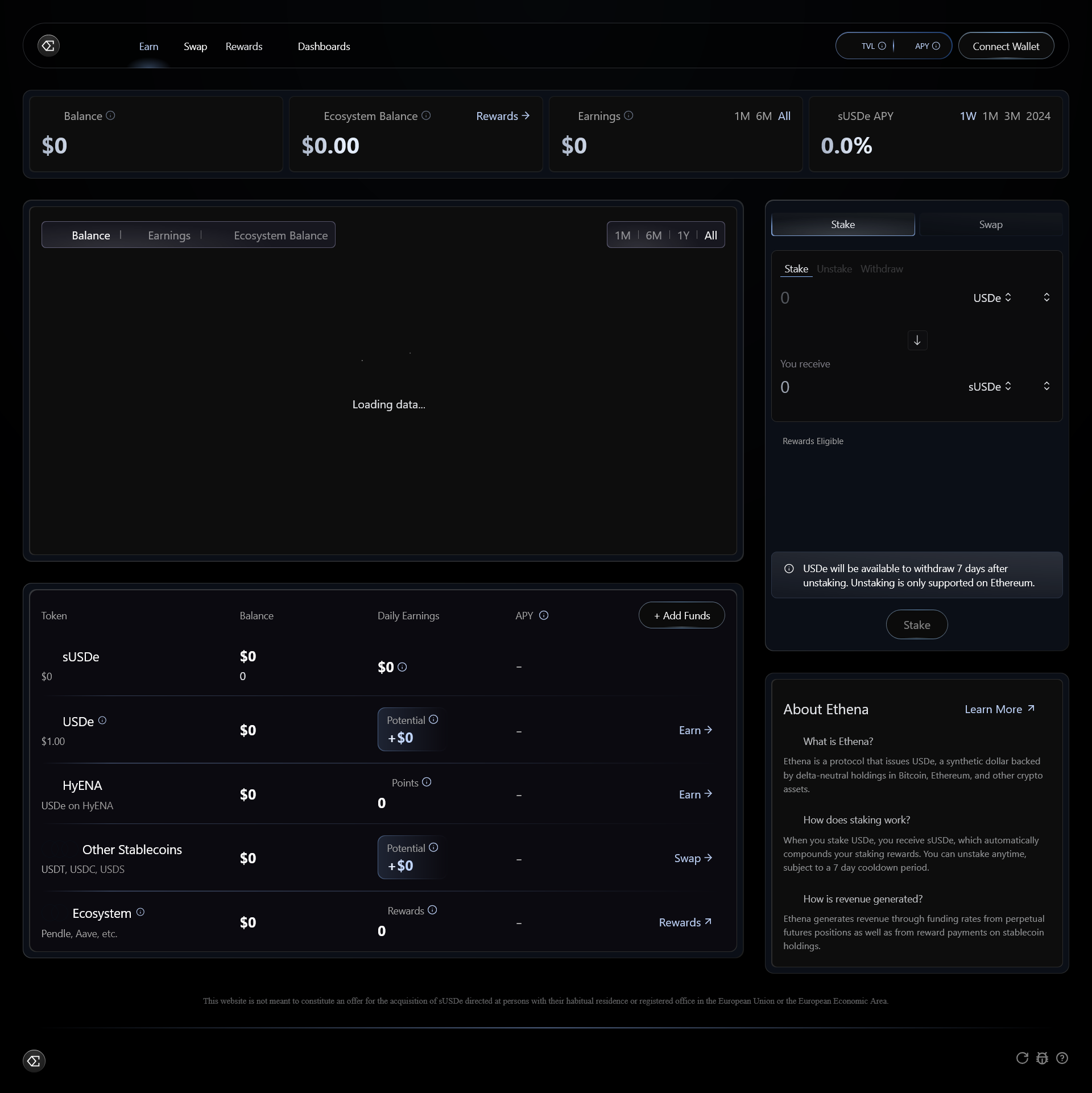
Ethena Fi: Redefining Stablecoins with a Crypto-Native Approach
Ethena Fi is a decentralized finance (DeFi) protocol designed to introduce a new kind of stable asset that is fully crypto-native, scalable, and independent of traditional banking infrastructure. By leveraging derivatives markets and on-chain collateral, Ethena aims to solve long-standing challenges faced by stablecoins, such as centralization, reliance on fiat reserves, and regulatory exposure.
At the core of Ethena Fi is USDe, a synthetic dollar that seeks to maintain price stability without holding actual U.S. dollars in bank accounts.
The Problem with Traditional Stablecoins
Most widely used stablecoins today fall into two categories:
1. Fiat-backed stablecoins (like USDT and USDC), which rely on off-chain bank reserves and custodians.
2. Crypto-collateralized stablecoins (like DAI), which often require heavy over-collateralization and can struggle with capital efficiency.
Both models have trade-offs. Fiat-backed stablecoins introduce counterparty risk, censorship concerns, and regulatory dependencies. Crypto-collateralized models, while more decentralized, can be inefficient and vulnerable during periods of extreme market volatility.
Ethena Fi was created to explore a third path.
How Ethena Fi Works
Ethena Fi introduces a delta-neutral stablecoin design. USDe is minted by depositing crypto assets (such as ETH or liquid staking tokens) as collateral, while Ethena simultaneously opens short positions in derivatives markets to hedge price exposure.
This structure aims to:-
. Neutralize market volatility
. Maintain a stable dollar peg
. Avoid reliance on fiat reserves
The protocol captures funding rate yields from perpetual futures markets, which historically tend to be positive during bullish or high-demand periods. These yields help support the system and, in some cases, are passed on to users.
sUSDe and Yield Generation :-
Ethena Fi also offers sUSDe, a staked version of USDe. By staking USDe, users gain exposure to the protocol’s underlying yield sources, including:
. Derivatives funding rates
. Staking rewards from collateral assets
. Protocol incentives
This makes sUSDe function as a yield-bearing synthetic dollar, an increasingly popular concept in DeFi.
Key Advantages of Ethena Fi
. Crypto-native: No dependence on banks or traditional financial rails.
. Capital efficiency: Less over-collateralization compared to traditional crypto-backed stablecoins.
. Composable: Designed to integrate easily across DeFi protocols.
. Scalable: Built to grow with derivatives liquidity rather than banking relationships.
Risks and Considerations :-
Despite its innovation, Ethena Fi is not without risks:
. Funding rate volatility: Sustained negative funding rates could reduce protocol profitability.
. Counterparty risk: Exposure to centralized or decentralized derivatives venues.
. Smart contract risk: As with all DeFi protocols, code vulnerabilities are a concern.
. Market stress events: Extreme market dislocations may challenge the delta-neutral model.
Ethena Fi is transparent about these risks and emphasizes risk management and gradual scaling.
Ethena’s Role in the Future of DeFi
Ethena Fi represents a broader shift in DeFi toward synthetic, yield-bearing, and capital-efficient assets. If successful over the long term, it could provide a blueprint for stable assets that are resilient, decentralized, and globally accessible.
As DeFi continues to mature, protocols like Ethena Fi highlight how financial engineering and blockchain technology can combine to create alternatives to traditional money—without relying on the traditional financial system itself.
If you’d like:
. a shorter Medium-style article
. a technical deep dive
. a tokenomics-focused piece
. or a marketing/PR version
just tell me the intended audience and platform.